
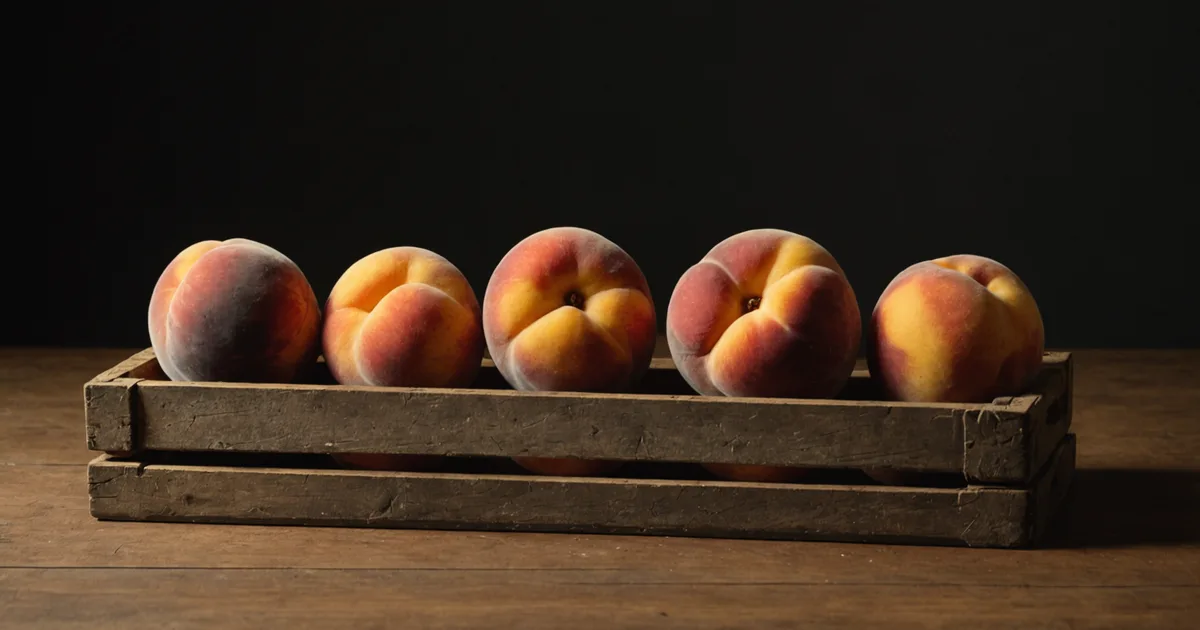
Within 24 to 48 hours, autocatalytic ethylene signaling can shift cellular senescence from a slower phase toward rapid decline. While a peach remains on the tree, xylem and phloem connections supply it with water, nutrients, and signaling compounds from the parent plant. Harvest cuts those connections. The fruit is then biologically on its own, still metabolically active, consuming stored resources, and moving toward cellular death. Its commercial value largely reflects where that countdown stands when it reaches the consumer. Post-harvest quality management means controlling the countdown's speed.
This article covers the biology of post-harvest deterioration: cellular senescence in practical terms, ethylene's role in ripening, the reason separation from the field speeds value loss, and the way food-safe coating affects those processes.
Cellular Senescence in Practical Terms
Biologically, senescence is programmed cellular aging followed by death. In harvested fruit, it appears as the gradual failure of the organized cell structures that preserve quality. As it progresses, membranes become less intact, compartments that normally separate enzymes from substrates lose their boundaries, and cellular contents mix, accelerating additional deterioration.
Common signs of advancing senescence include softening, as ripening activates pectinase and cellulase enzymes that break down cell walls; color change, as chlorophyll disappears and carotenoids or anthocyanins show through; and browning, as oxygen allows polyphenol oxidase to oxidize phenolic compounds. These visible signs are the outward results of biochemical changes that started earlier.
The practical point is that produce can look acceptable while already being several days into senescence that will soon become visible. Packing-house grading records its condition at that moment, not its rate of change or likely trajectory. A batch accepted on Day 1 but moving rapidly through senescence may fail retail grading by Day 4, despite looking sound when the packing-house decision was made.
Ethylene as a Signal
Plant cells produce ethylene, a hormone that serves as the main ripening signal in climacteric fruit. Apples, pears, peaches, nectarines, plums, bananas, tomatoes, and mangoes are climacteric fruits. At ripening onset, they show a characteristic respiration burst alongside increased ethylene production. That event initiates starch-to-sugar conversion, lower organic acid levels, cell-wall softening, and aroma synthesis.
Ethylene signaling is autocatalytic: ethylene stimulates further ethylene production. After the ripening cascade starts in climacteric fruit, it drives itself faster. Fruit moving from low, elevated ethylene production can reach high production and rapid ripening over a short period. The shift is not linear and may move from slow to fast ripening within 24 to 48 hours.
Ethylene from outside the fruit also has an effect. Gas released by one ripening fruit can initiate or speed ripening in nearby fruit. In time, one or two fruits entering the ethylene-surge stage can raise ethylene levels across a crate. That is why one overripe item in a retail display may hasten decline around it: the gas and its effect are real, and a closed crate magnifies the concentration effect.
Why Separation Speeds Value Loss
While attached to the parent plant, fruit receives feedback signals that help control ripening. Signaling compounds traveling through the vascular connection adjust ethylene sensitivity and the rate of senescence. Harvest ends that regulatory input. The fruit moves from hormonal balance with the plant to a state governed only by its internal chemistry.
This helps explain why post-harvest deterioration is not merely pre-harvest ripening at a slower pace. Removing parent-plant signals can alter ripening speed, sometimes making it faster. Some varieties ripen more quickly after separation than they would have if left on the tree beyond optimal maturity. Commercial harvest timing therefore balances field maturity, which affects flavor, against stability during post-harvest handling.
Heat speeds all of these processes. A rise of 10 degrees Celsius approximately doubles the rate of most enzyme-driven biological reactions in produce. Biochemically, a harvested peach at 30 degrees Celsius runs at about four times the speed of the same peach at 10 degrees Celsius. Cold chain works because it slows the biology rather than removing it.
Respiration Sets the Biological Clock
Respiration is the metabolic process in which harvested produce uses stored carbohydrates and releases CO2, water, and heat. It functions as the main biological clock of post-harvest quality. While respiration remains active, produce consumes its reserves and advances through senescence. Its rate determines how quickly that clock moves.
Respiration rates differ greatly among crops. Leafy greens such as spinach and lettuce respire quickly and deteriorate rapidly at ambient temperature. Firm pome fruit such as apples and pears respire more slowly and maintain shelf life longer under equivalent conditions. Stone fruit sits between these groups, while tropical fruit such as mango can show a distinct climacteric respiration burst and rapid quality change over a short period.
For producers and packers, respiration rate sets handling urgency. High-respiration crops need controlled conditions soon after harvest, while low-respiration crops tolerate delays more readily. Handling protocols should therefore reflect the biology of each crop instead of applying one generic produce standard.
How Food-Safe Coating Alters the Biology
Food-safe coating forms a semi-permeable layer across the fruit surface. It changes how quickly oxygen, CO2, and water vapor move between the fruit and surrounding air. In practice, this means less transpiration and moisture loss, less oxygen available for respiration and therefore a slower respiration rate, plus CO2 accumulation around the fruit that inhibits ethylene production and sensitivity in most climacteric fruit.
The CO2 effect is especially important for ethylene control. CO2 competes with ethylene at plant-cell receptor sites, making the fruit less responsive to the signal. A coating can create mild CO2 enrichment at the surface without producing enough CO2 for anaerobic conditions, slowing the ethylene-driven ripening cascade. This is a defined biological mechanism, not a general freshness claim. It applies the principle of controlled-atmosphere storage at the fruit surface rather than throughout a warehouse.
For citrus and other non-climacteric fruits, ethylene sensitivity is less important. The coating's moisture barrier is the main benefit. Lower transpiration helps preserve rind integrity, limits weight loss, and reduces wrinkling and desiccation, the visual decline that can cause retail downgrading.
What Coating Cannot Change
Coating slows biological activity that has already begun; it cannot undo existing deterioration. A peach that reaches the packing house already soft will not become firm again after coating. Nor will coating effectively treat a batch with active surface mold. Once mold has entered the surface, applying a coating over it does not remove the infection.
Coating cannot alter a variety's genetic potential. A variety with a natural ambient shelf life of 7 days may reach roughly 11 to 13 days with effective coating and good handling. It will not reach 30 days. Biology establishes a ceiling that intervention can approach but cannot exceed.
Coating performs best when produce is in good condition at harvest. Applying it earlier in the post-harvest chain captures more of the possible shelf-life extension. Coating at the packing house within hours of harvest preserves a stronger quality baseline than applying it 48 hours later, after part of the biological window has passed. Application timing within the packing-house workflow therefore matters, as does linking coating decisions to batch routing so produce receives treatment early and specifically enough to provide the greatest benefit.
See Ecogear on your packing line.
Sample kits ship within 14 days of approval. No commercial commitment required.
Request a Sample Kit