
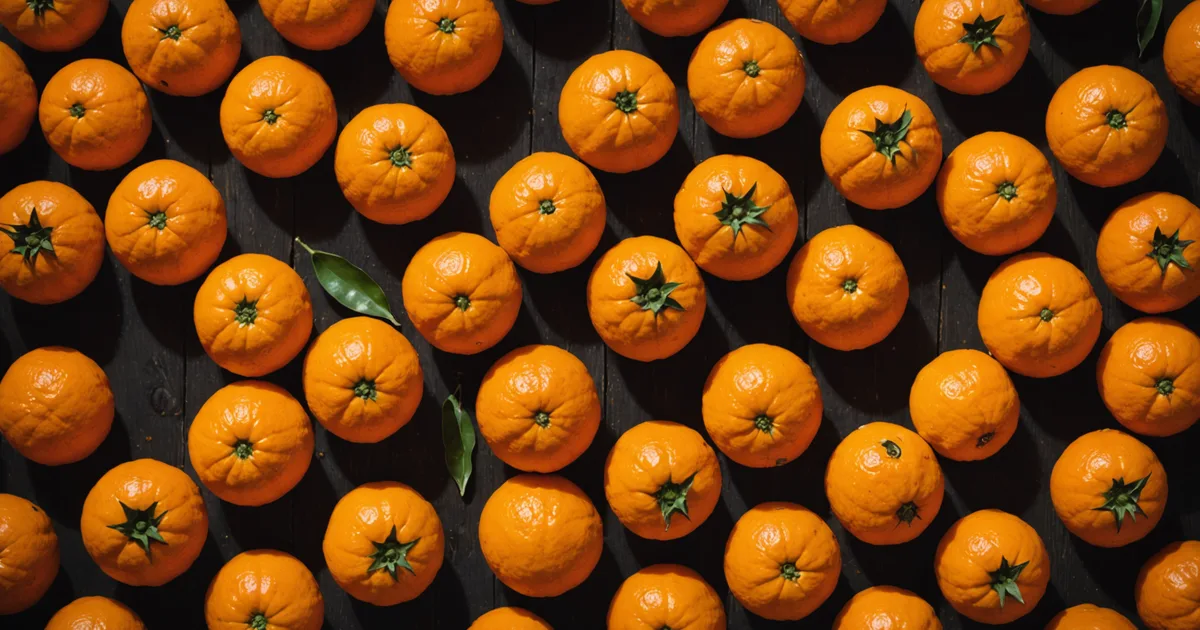
After harvest, citrus peel cells still support a natural barrier. The outer flavedo, the colored part of the rind, carries epicuticular wax secreted by cells beneath the surface. This wax limits water loss and offers some protection. Commercial packers usually wash incoming citrus with water and, at times, mild sanitizing solutions. Washing removes a significant share of that natural wax. Applying a food-safe coating afterward partly restores the barrier lost during washing.
This starting condition changes how the coating's purpose should be understood. On citrus, the coating is not simply placing an outside layer over an untouched surface. It is rebuilding a barrier that formed in the field and was partly removed during sanitation. That distinction helps explain the optimization target and why formulations behave differently with citrus peel physiology.
Why Citrus Requires Special Handling
Citrus creates a coating problem unlike most other fruit categories. Its peel is thick, fairly rigid, and offers considerable physical protection. In commercial distribution, citrus primarily deteriorates through moisture leaving the flavedo, causing wrinkling and weight loss; fungal entry through damaged peel or the stem end; and, in some varieties, oxidation of peel oils that can alter flavor during longer storage.
Citrus also exchanges CO2 and O2 more actively than most pome fruit at comparable storage temperatures. The peel remains metabolically active. A formulation that greatly limits gas movement can produce a modified atmosphere within the fruit, shifting CO2 and O2 levels in ways that influence flavor and internal chemistry, especially at heavier application weights. This matters less during short or medium distribution, but becomes important for fruit held longer or shipped over greater distances.
The result is that a coating successful on apples or pears may not suit citrus, and vice versa. Citrus formulation choice must balance moisture retention with the gas exchange limits created by its particular peel physiology.
Wax Coatings: The Usual Standard
Carnauba wax and shellac have coated commercial citrus for decades. Made from Brazilian palm leaves, carnauba wax is GRAS, or generally recognized as safe, under US FDA standards. Codex Alimentarius general standards permit it for fresh-produce surface treatment. Korean food additive rules also approve it for that use, which matters for produce handled through Korean packing facilities.
At moderate application rates, carnauba wax retains moisture effectively, creates the gloss many retail buyers require for grading, and permits enough gas exchange to avoid problematic internal atmospheres at normal commercial levels. It is the least contentious choice, with familiar chemistry, a long commercial record, and relatively direct regulatory clearance in most major markets.
For extended shelf-life use, carnauba wax's limitation is moderate moisture retention compared with some protein-based options. In a Korean domestic distribution chain lasting 10 to 14 days from packing to purchase, it is usually sufficient. For citrus entering 30-plus-day export storage before distribution, moisture control matters more, and another formulation may provide a meaningful benefit.
Polyethylene wax is another widely used citrus coating. At the same application rate, it gives greater gloss and stronger moisture retention than carnauba, but its regulatory position is tighter in some export markets. Produce bound for EU or Japanese markets requires regulatory clearance checks before polyethylene wax is used.
Shellac: Strong Results, Complex Rules
Shellac is a resin produced by the lac insect. It has served as a produce coating for over 70 years, offering strong moisture retention, high gloss, and good film integrity. For citrus held in extended storage, its moisture barrier performance is generally viewed as better than carnauba wax.
Its main complication is regulatory status. Most vegan certification standards do not classify shellac as vegan, which can create problems for produce entering vegan-certified markets or retail channels. In some EU segments, shellac-coated produce needs labeling that identifies an insect-derived additive. Japan's food additive rules handle shellac differently according to application method and concentration.
These restrictions do not apply to shellac-coated citrus in Korean domestic distribution, making it a reasonable choice for domestic retail operations. Export packing workflows require checking the destination market's regulatory and certification requirements before adopting a shellac coating.
Plant Protein Coatings: Our Testing
Plant-derived protein coatings, commonly based on soy, wheat, or cassava starch derivatives, take a different approach from wax coatings. At the same application weight, protein films generally allow more gas movement than wax films. They therefore create a milder modified atmosphere around the fruit, useful for citrus because excessive CO2 accumulation is a concern, while still retaining meaningful moisture.
In health-conscious market segments, plant protein coatings often have simpler regulatory profiles. They avoid shellac's animal-derived concerns and may suit organic certification in some formulations, depending on their ingredients and processing.
The compromise is lower film strength than wax at equivalent moisture retention. Matching carnauba wax's moisture barrier may require applying more protein coating, raising cost and potentially causing film integrity problems when application control is poor.
Ecogear's citrus coating combines protein and wax. Protein supplies breathability and fit with citrus peel physiology, while wax supports film integrity and appearance. We developed the hybrid through internal trials involving multiple citrus varieties because no single coating consistently balanced moisture retention, gas exchange management, and film appearance across the varieties we handle.
Findings From Our Pilot Data
During internal pilot trials on Jeju mandarin and navel orange batches in the 2024 to 2025 packing season, we defined shelf life as the days until first visible surface deterioration. Signs included wilting, discoloration, or surface mold under simulated ambient retail conditions of 18 to 22 degrees Celsius and standard retail humidity.
Uncoated controls first showed visible deterioration after an average of 9.4 days from packing. With our hybrid coating, the average was 15.8 days, an increase of 6.4 days. Individual batches gained 4 to 9 additional days, depending on incoming batch quality and variety.
Mandarins with thinner rinds gained more from coating than navel oranges with thicker, waxier rinds. That matches the expectation that coating contributes more when fruit begins with less natural barrier protection.
This is internal pilot evidence from a limited set of batches during one commercial season. It shows that the coating works and gives a reasonable estimate of the expected shelf-life range. It is not a controlled clinical study. Results at a particular facility will vary with batch quality, application consistency, and distribution conditions.
Selecting a Coating for Export
For export produce, regulatory clearance must come first. Approved coating materials and labeling rules vary substantially among Korea, the EU, Japan, China, and other markets. Carnauba wax is cleared broadly in most major markets. Shellac needs specific checks for EU and Japan, while protein coatings must be reviewed against the additive approvals applicable to each formulation in every destination.
After clearance, selection depends on moisture retention against the distribution window, gas exchange fit for the citrus variety, and compatibility with the packing line's application system.
For Korean domestic distribution lasting 10 to 14 days, carnauba wax or a protein-wax hybrid will generally be adequate. For Japan or China export with 20 to 30 days from packing to retail, stronger moisture retention is more important, and the hybrid commonly performs better. For EU shipments, formulation-specific regulatory and labeling checks precede performance comparisons.
Variety is another factor. A facility handling mandarin, navel, and blood orange together may find that no single coating gives the best result for all three. A hybrid that performs consistently across varieties can be more practical than changing formulations by variety, even when each variety has a different ideal coating.
See Ecogear on your packing line
Sample kits ship within 14 days of approval. No purchase commitment required.
Request a Sample Kit