
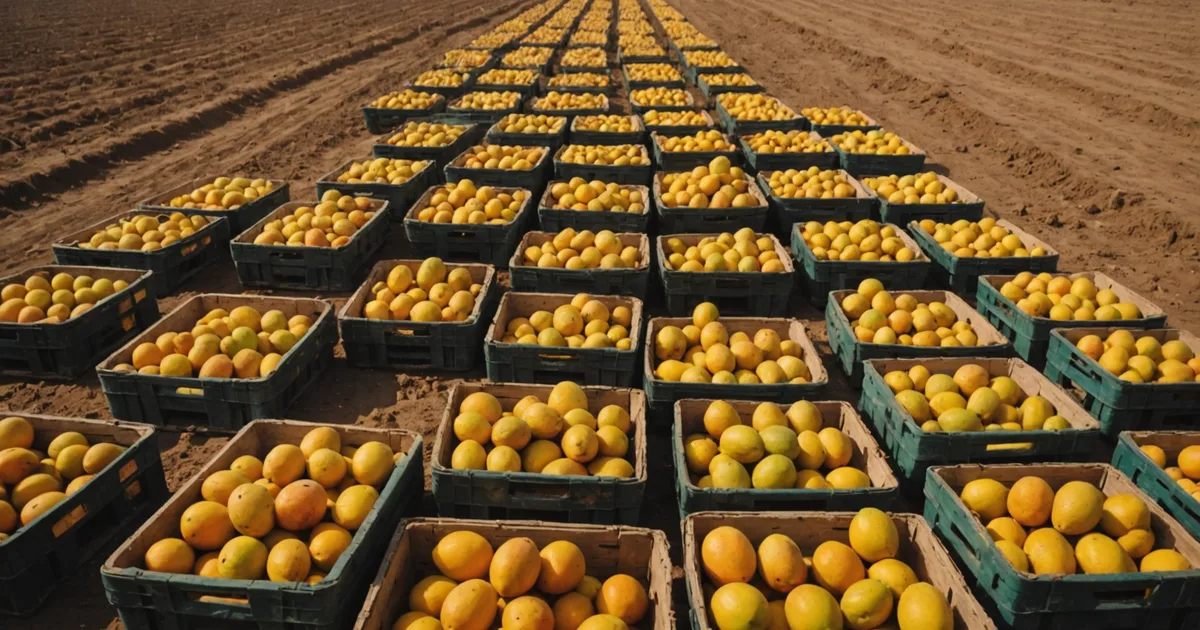
Korea loses 15 to 25 percent of fresh produce between harvest and retail consumption, depending on crop and season. In Vietnam and Thailand, industry estimates put fresh vegetable losses at 25 to 40 percent and fresh fruit losses at 20 to 35 percent, with substantial variation by crop and supply-chain stage. These are composite ranges based on agricultural development assessments, international food and agriculture research, and direct field observation. They are not exact figures from one authoritative source, and study-to-study variation means they should be read directionally. Still, the temperate to tropical gap appears consistently, and the mechanisms producing it are well understood.
This article considers what these figures mean for growers and packers in each market, why tropical and subtropical chains carry structurally greater spoilage risk than temperate ones, and how retail rejection fits into the loss picture.
Korea: Modern Infrastructure, Persistent Gaps
Korea's post-harvest profile is shaped by two opposing forces. Major commercial crops have seen lower spoilage as cold-chain infrastructure received substantial investment over the past two decades. Large cooperatives and retail distributors built refrigerated warehouse networks, while major supermarket chains generally maintain continuous refrigeration from regional distribution centers to stores.
Yet mid-scale and small growers still work through a fragmented chain. Produce travels from farms to regional cooperatives and then urban wholesale markets, encountering several handling points. Each can involve time at ambient temperature, mechanical damage, and inconsistent handling practice. Those small exposures add up measurably, even when every single step seems manageable.
Without systematic post-harvest treatment, Korean apples and pears commonly show commercial-scale losses of 10 to 18 percent. Stone fruit, especially peaches and nectarines with shorter natural shelf lives, reaches 15 to 25 percent during summer harvest. Jeju citrus usually has less volume loss because its rind forms a natural barrier, but surface marks and moisture loss produce more grade downgrading.
Retail rejection at major Korean distribution centers adds a separate source of pressure. Supermarket chains use strict visual intake grades, so produce can pass packing-house inspection yet fail delivery inspection after its appearance changes in transit. Quality must therefore be managed twice: meet the packing-house standard, then preserve it through distribution and 24 to 48 hours of ambient transit.
Vietnam: Tropical Produce, Fragmented Movement
Vietnam's post-harvest pattern is structurally unlike Korea's. Its crop mix includes mango, dragon fruit, lychee, rambutan, banana, and many tropical vegetables. Southern areas have high temperatures throughout the year, while humidity speeds fungal development on produce with thin or permeable skin. The chain is also more fragmented, with longer routes from growing areas to cities and limited cold-chain coverage beyond export-focused facilities.
Available assessments, along with our observations in Mekong Delta growing regions, place domestic Vietnamese tropical-fruit losses at 25 to 35 percent. Repeated handling causes mechanical damage, road transport brings temperature abuse, and high humidity combined with skin damage supports fungal infection.
Vietnam's export-oriented produce segment operates under different conditions. Facilities supplying China, Korea, and Japan generally have tighter quality controls, broader cold-chain coverage, and more consistent packing. Well-managed operations in this segment often record losses of 10 to 18 percent. However, it accounts for a minority of total Vietnamese produce volume. The domestic chain supplying provincial and urban markets remains nearer the upper end of the range.
Thailand: Distance, Crop Diversity, Export Value
Thailand has a broader crop mix and more complex geography than Vietnam. Key regions for high-value export crops, including southern durian, northern longan and lychee, and eastern mangosteen, lie far from Bangkok and the main export logistics hubs.
Longan shipped from Chiang Rai to Bangkok travels over 700 kilometers. At room temperature, its natural shelf life is 7 to 10 days, so that journey, often ambient or only lightly cooled, uses much of the available window before retail or export processing. After two to three more handling stages, only two to four days of shelf life may remain when consumers buy the fruit.
Export Thai durian follows a different pattern. Export shipments receive more cold-chain support, and premium farmgate value can justify the infrastructure. Exporters also have a relatively developed understanding of harvest timing and coating application. For domestic, non-export produce, however, spoilage resembles Vietnam's: 25 to 40 percent for vegetables and 20 to 30 percent for fresh fruit.
Why Tropical Markets Start With Higher Loss
Vietnam and Thailand do not lose more than Korea simply because their supply chains are managed better or worse. The difference also reflects tropical produce biology in warm conditions.
Respiration is the key variable. At 30 degrees Celsius, a mango respires at roughly twice its rate at 20 degrees. Its post-harvest clock therefore runs twice as quickly, with every ambient stage accelerating deterioration accordingly. Lowering ambient temperature from 30 to 20 degrees is not a minor operating gain; it doubles the available biological time.
Tropical produce often has thinner natural skin barriers than temperate produce. Korean apples and pears receive meaningful physical and moisture protection from their skin, while lychee, rambutan, and dragon fruit receive much less. As a result, tropical crops are more vulnerable to moisture loss, handling damage, and fungal entry than temperate fruit with thicker or waxier skin.
Ethylene behavior adds another difference. Climacteric tropical fruits such as mango and banana are highly sensitive to ethylene from outside sources. Even small amounts from other produce in a mixed load can speed ripening throughout the batch. Temperature control that limits ethylene production and sensitivity is therefore especially important, and management gaps carry greater consequences.
The Challenge of Retail Rejection Rates
Industry statistics show the system-level issue. Retail delivery rejection rates show what that issue means for a specific operation.
A 10 percent retailer rejection rate means 10 percent of the crop a grower paid to harvest, pack, and ship was returned or written off. Labor, packing materials, and transport costs have already been incurred, but the rejected produce earns nothing. For operations with net margins of 15 to 25 percent, a 10 percent rejection rate can take 40 to 60 percent of the margin that rejected volume otherwise would have produced.
At major Korean supermarket distribution centers, fresh-fruit and vegetable rejection generally runs from 5 to 15 percent for operations without systematic post-harvest treatment. Consistent cold-chain management and data-based batch assessment tend to place operations near 5 percent, while manual sorting without sensor input tends toward 15 percent.
Export-facing operations in Vietnam and Thailand with strict quality controls can reach rejection rates similar to those in Korea. Domestic operations vary more, and the point where spoilage is recorded is not always the same. A loss counted as retail rejection in Korea may instead appear elsewhere as gradual downgrading and markdown, without a formal rejection event.
Turning Loss Figures Into Intervention Choices
The practical lesson from regional loss figures is not that every operation should invest more in preservation. Loss mechanisms vary by market and crop, so the intervention needs to address the mechanism actually causing the loss.
For Korean operators with cold chain already in place, the most useful intervention is often retail delivery: apply coating to extend life beyond the ambient retail period, then route it to batches facing the greatest biological risk. The aim is to reduce dock rejection and retail-stage spoilage, not replace infrastructure that is functioning.
Where Southeast Asian cold chain is limited, coating can establish a biological quality floor under ambient conditions. When coating capacity is constrained, deciding which batches receive treatment matters more, because baseline spoilage pressure is higher overall and treating the right crates delivers greater value than treating arbitrary crates.
Both markets face genuine post-harvest losses, and many response tools overlap. Their priority depends on the supply chain conditions found on the ground.
See Ecogear on your packing line
Sample kits ship within 14 days of approval. No commercial commitment required.
Request a Sample Kit